
A well-crafted skincare routine is essential for maintaining healthy, youthful-looking skin. As we age, our skin undergoes various changes that can lead to wrinkles, fine lines, and age spots.
To combat these signs of aging, it’s crucial to adopt effective anti-aging strategies. This includes using the right products, protecting your skin from the sun, and staying consistent with your skincare regimen.
By incorporating simple yet effective tips into your daily routine, you can significantly improve the appearance and health of your skin.
Key Takeaways
- Establish a consistent skincare routine
- Use products containing anti-aging ingredients
- Protect your skin from sun damage
- Stay hydrated and maintain a healthy lifestyle
- Consider professional skincare treatments
Understanding Skin Aging: The Science Behind Wrinkles
Understanding the science behind skin aging is crucial for developing effective anti-aging strategies. Skin aging is a complex process that involves both intrinsic (natural aging) and extrinsic (external factors like UV exposure) elements.
Natural Aging vs. Photoaging
Skin aging can be categorized into two main types: natural aging and photoaging. Natural aging refers to the intrinsic aging process that occurs over time, influenced by genetics. On the other hand, photoaging is caused by exposure to UV radiation, leading to premature aging.
The Role of Collagen and Elastin
Collagen and elastin are two crucial proteins that give skin its strength, elasticity, and firmness. As we age, the production of these proteins decreases, leading to wrinkles and sagging skin.
Free Radical Damage and Oxidative Stress
Free radicals are unstable molecules that cause oxidative stress, damaging skin cells and contributing to the aging process. Antioxidants play a key role in neutralizing free radicals, thereby reducing oxidative stress.
- Key factors in skin aging include UV exposure, smoking, and pollution.
- Maintaining a healthy lifestyle and using protective skincare products can help mitigate these effects.
Essential Anti-Aging Skincare Tips for Visible Results
Visible anti-aging results are attainable with the right skincare routine and consistency. A well-structured skincare regimen is crucial for maintaining healthy, youthful-looking skin.
Morning vs. Evening Skincare Routines
Your morning skincare routine should focus on protection, using products with antioxidants and SPF to shield your skin from daily environmental stressors. In contrast, your evening routine should emphasize repair, utilizing products with retinoids and peptides to rejuvenate your skin while you sleep.
Consistency: The Key to Success
Consistency is paramount in any skincare routine. It’s essential to stick to your regimen, giving your skin time to respond to the products. Skincare is a long-term investment; visible results often take time to manifest.
Adapting Your Routine to Seasonal Changes
As the seasons change, so should your skincare routine. In the winter, focus on hydration and nourishment with richer moisturizers. In the summer, switch to lighter products and emphasize sun protection.
Gentle Cleansing Techniques
Gentle cleansing is vital to remove dirt and makeup without stripping your skin of its natural oils. Use lukewarm water and a mild cleanser, massaging it onto your skin before rinsing thoroughly.
| Skincare Tip | Morning Routine | Evening Routine |
|---|---|---|
| Cleansing | Gentle cleanser | Double cleansing |
| Moisturizing | Light moisturizer with SPF | Rich night cream |
| Serum | Antioxidant serum | Retinoid or peptide serum |
Sun Protection: Your First Line of Defense Against Aging
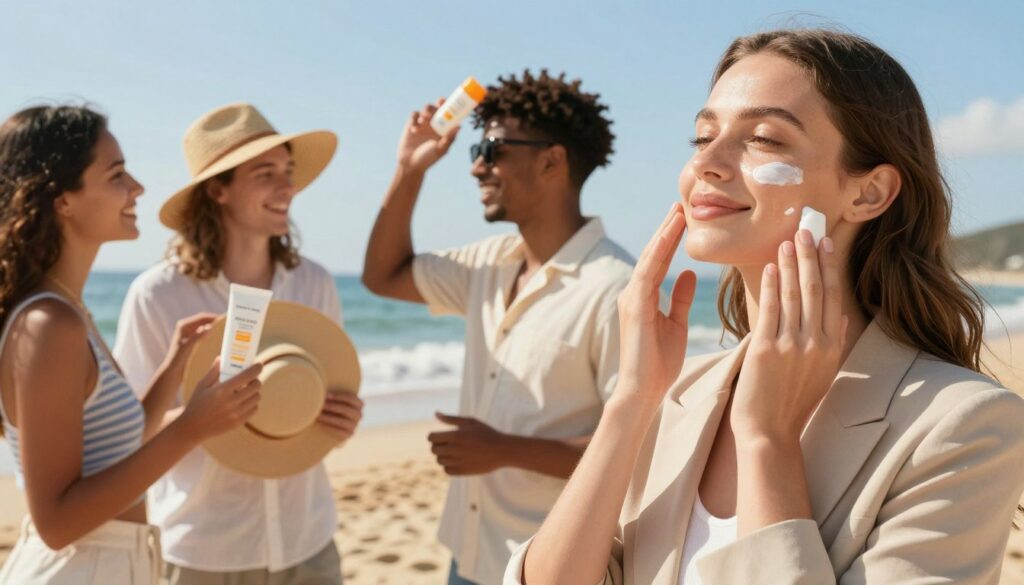
Sun protection is not just about preventing sunburn; it’s a critical anti-aging strategy. The sun’s ultraviolet (UV) rays are a primary cause of skin aging, leading to wrinkles, age spots, and loss of skin elasticity. Effective sun protection helps prevent these signs of aging, keeping your skin looking healthier and more youthful.
Choosing the Right SPF for Your Skin Type
Selecting the appropriate Sun Protection Factor (SPF) is crucial for adequate protection. For most people, a broad-spectrum sunscreen with an SPF of at least 30 is recommended. However, individuals with fair skin may require higher SPF, while those with darker skin tones might opt for lower SPF. It’s essential to consider your skin type and activities when choosing an SPF.
Physical vs. Chemical Sunscreens
Sunscreens can be categorized into physical and chemical types. Physical sunscreens work by creating a barrier on the skin’s surface that reflects UV rays, typically containing zinc oxide or titanium dioxide. Chemical sunscreens absorb UV rays and convert them into heat, which is then released from the skin. Both types have their benefits, and the choice often comes down to personal preference and skin sensitivity.
Year-Round Sun Protection Strategies
Sun protection is not just for sunny days; UV rays can penetrate through clouds and glass. For year-round protection, incorporate sunscreen into your daily skincare routine, even on cloudy days and during winter months. Additionally, use other protective measures like wearing protective clothing and seeking shade when the sun is strong.
Reapplication Tips for Daily Use
To maintain effective sun protection, reapply sunscreen every two hours or immediately after swimming or sweating. For daily use, consider using a moisturizer or foundation that contains SPF to simplify your routine. Here are some tips for reapplication:
- Use a powder or spray sunscreen for easy reapplication over makeup.
- Keep a travel-sized sunscreen for on-the-go reapplication.
- Set reminders to reapply sunscreen throughout the day.
Powerful Anti-Aging Ingredients That Transform Skin
Effective anti-aging skincare hinges on leveraging ingredients that have been scientifically validated to improve skin health and appearance. These ingredients work synergistically to address various signs of aging, from fine lines and wrinkles to loss of firmness and hydration.
Retinoids: The Gold Standard in Anti-Aging
Retinoids, derivatives of vitamin A, are considered the gold standard in anti-aging skincare. They promote cell turnover, stimulate collagen production, and improve skin texture. Regular use of retinoids can significantly reduce the appearance of fine lines, wrinkles, and age spots.
Antioxidants: Vitamin C, E, and Niacinamide
Antioxidants play a crucial role in protecting the skin from environmental stressors and damage caused by free radicals. Vitamin C, Vitamin E, and Niacinamide are potent antioxidants that help brighten the skin, improve skin elasticity, and reduce inflammation.
Peptides and Growth Factors
Peptides are short chains of amino acids that can stimulate collagen production and improve skin elasticity. Growth factors, on the other hand, are proteins that promote cell growth and renewal. Together, they can enhance skin firmness and reduce the appearance of fine lines and wrinkles.
Hyaluronic Acid and Ceramides
Hyaluronic acid is a powerful humectant that retains moisture in the skin, plumping it up and reducing the appearance of fine lines. Ceramides, essential lipids, help restore the skin’s barrier function, improving its resilience against environmental stressors.
AHAs and BHAs for Cell Renewal
Alpha-hydroxy acids (AHAs) and beta-hydroxy acids (BHAs) are exfoliants that help remove dead skin cells, promoting cell renewal. AHAs, such as glycolic acid, work on the skin’s surface, while BHAs, like salicylic acid, penetrate deeper, unclogging pores and reducing acne.
| Ingredient | Benefits |
|---|---|
| Retinoids | Promote cell turnover, stimulate collagen production, improve skin texture |
| Antioxidants (Vitamin C, E, Niacinamide) | Protect against environmental stressors, brighten skin, improve elasticity |
| Peptides and Growth Factors | Stimulate collagen production, enhance skin firmness |
| Hyaluronic Acid and Ceramides | Retain moisture, restore skin barrier function |
| AHAs and BHAs | Exfoliate, promote cell renewal, unclog pores |
Targeted Treatments for Specific Aging Concerns
Aging skin presents a multitude of challenges, from loss of firmness to hyperpigmentation. Effective skincare involves addressing these concerns with targeted treatments.
Addressing Fine Lines and Wrinkles
Fine lines and wrinkles are among the most common signs of aging. Treatments such as retinoids, peptides, and facial fillers can help reduce their appearance. Retinoids, derived from vitamin A, promote cell turnover and collagen production, thereby smoothing out wrinkles.
Combating Age Spots and Hyperpigmentation
Age spots and hyperpigmentation can be addressed through various treatments, including chemical peels, laser therapy, and topical creams containing ingredients like vitamin C and niacinamide. These treatments help in reducing the melanin concentration in the affected areas, thus evening out skin tone.

Solutions for Loss of Firmness and Elasticity
Loss of firmness and elasticity is a significant concern as skin ages. Treatments that stimulate collagen production, such as radiofrequency and microneedling, can help restore some of the lost firmness. Additionally, skincare products containing hyaluronic acid and ceramides can improve skin elasticity.
Under-Eye Treatments for Dark Circles and Puffiness
The under-eye area is particularly delicate and prone to concerns like dark circles and puffiness. Treatments include topical creams with caffeine and peptides, as well as more invasive options like fillers and chemical peels. Cooling eye masks and adequate sleep also play a crucial role in managing these issues.
| Aging Concern | Treatment Options | Key Ingredients |
|---|---|---|
| Fine Lines and Wrinkles | Retinoids, Peptides, Facial Fillers | Vitamin A, Collagen Boosters |
| Age Spots and Hyperpigmentation | Chemical Peels, Laser Therapy, Topical Creams | Vitamin C, Niacinamide |
| Loss of Firmness and Elasticity | Radiofrequency, Microneedling, Skincare Products | Hyaluronic Acid, Ceramides |
| Under-Eye Dark Circles and Puffiness | Topical Creams, Fillers, Chemical Peels | Caffeine, Peptides |
Anti-Aging Skincare Tips for Every Decade: 20s to 60s
As we journey through life, our skin’s needs evolve, making it crucial to adapt our skincare routines to address the changing signs of aging. Understanding the unique challenges and opportunities presented by each decade can help us tailor our approach to maintain healthy, vibrant skin.
Preventative Care in Your 20s
In your 20s, the focus should be on preventative care. Establishing a consistent skincare routine that includes cleansing, moisturizing, and sun protection can significantly impact the long-term health and appearance of your skin. Using products with antioxidants can help combat early signs of aging caused by environmental stressors.
Maintenance in Your 30s
By your 30s, the first signs of aging may begin to appear. Maintenance becomes key, with an emphasis on retinoids to promote cell turnover and collagen production. Continuing sun protection and introducing eye creams to address concerns like dark circles and puffiness is also beneficial.
Correction and Repair in Your 40s
In your 40s, correction and repair become the focus. This decade often sees more pronounced signs of aging, such as deeper wrinkles and loss of skin elasticity. Incorporating peptides and hyaluronic acid into your routine can help address these concerns by boosting collagen and providing intense hydration.
Intensive Care for 50+ Skin
For those over 50, intensive care is essential. Skin may become thinner, drier, and less elastic. Using richer moisturizers and products containing ceramides and niacinamide can help restore the skin’s barrier function and improve its appearance.
Special Considerations for 60+ Skin
In your 60s and beyond, skin care should focus on gentle, nourishing products that support the skin’s natural barrier. Continued sun protection remains vital, along with the use of gentle exfoliants and hydrating masks to maintain skin health.
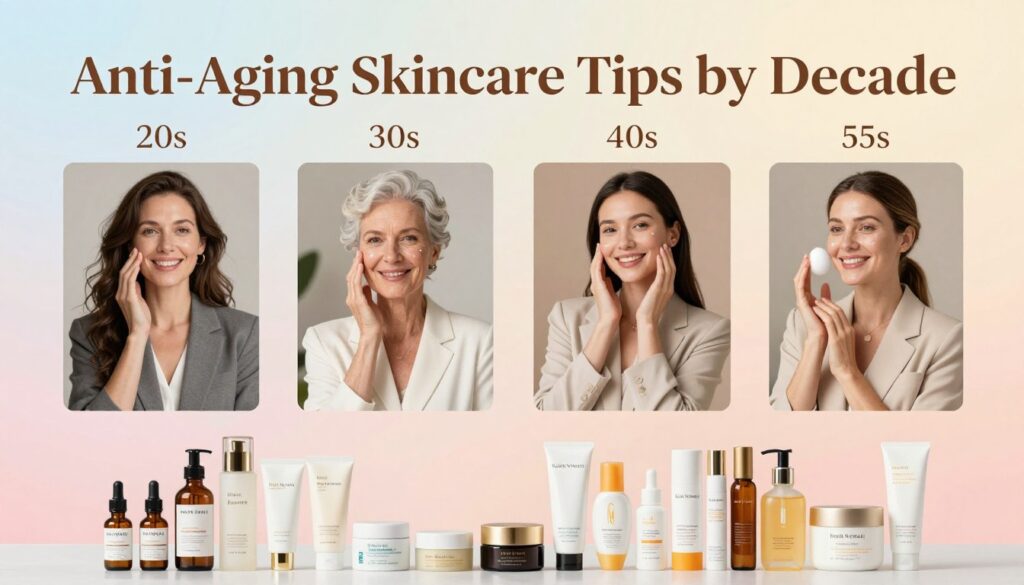
| Decade | Skincare Focus | Key Ingredients |
|---|---|---|
| 20s | Preventative Care | Antioxidants, Sunscreen |
| 30s | Maintenance | Retinoids, Eye Creams |
| 40s | Correction and Repair | Peptides, Hyaluronic Acid |
| 50+ | Intensive Care | Ceramides, Niacinamide |
| 60+ | Gentle Nourishment | Gentle Exfoliants, Hydrating Masks |
Professional Treatments to Enhance Your Anti-Aging Results
To achieve optimal anti-aging results, many individuals turn to professional treatments that complement their skincare routines. These treatments can address specific aging concerns, such as fine lines, wrinkles, age spots, and loss of skin firmness.
Chemical Peels and Microdermabrasion
Chemical peels and microdermabrasion are popular exfoliating treatments that help remove dead skin cells, revealing smoother, brighter skin. Chemical peels involve applying a solution to remove the top layers of the skin, while microdermabrasion uses a device to gently exfoliate the skin’s surface.
Laser Treatments and Radiofrequency
Laser treatments and radiofrequency (RF) are non-invasive procedures that stimulate collagen production, reducing the appearance of fine lines and wrinkles. Laser treatments target specific skin concerns, such as age spots or vascular lesions, while RF treatments heat the deeper layers of the skin to promote collagen remodeling.
Injectables and Fillers
Injectables, such as botulinum toxin and dermal fillers, are used to temporarily relax facial muscles and restore lost volume. These treatments can effectively reduce the appearance of wrinkles and fine lines, restoring a smoother, more youthful appearance.
Microneedling and PRP Therapy
Microneedling involves using tiny needles to create micro-injuries in the skin, stimulating collagen production and improving skin texture. Platelet-rich plasma (PRP) therapy involves applying platelet-rich plasma derived from the patient’s own blood to enhance the skin’s natural healing process.
When to Consider Professional Intervention
Professional treatments can be considered when topical skincare products are no longer effective in addressing aging concerns. It’s essential to consult with a dermatologist or skincare professional to determine the best course of treatment for your individual skin concerns.
| Treatment | Benefits | Downtime |
|---|---|---|
| Chemical Peels | Exfoliates skin, reduces fine lines | 1-3 days |
| Laser Treatments | Stimulates collagen, reduces age spots | 1-7 days |
| Injectables | Relaxes facial muscles, restores volume | 1-3 days |
| Microneedling | Stimulates collagen, improves skin texture | 1-3 days |
Lifestyle Factors That Impact Skin Aging
Lifestyle choices play a crucial role in determining the health and appearance of our skin as we age. While genetics and environmental factors also contribute to skin aging, certain daily habits can either accelerate or mitigate the process.
Nutrition and Hydration for Youthful Skin
A well-balanced diet rich in fruits, vegetables, whole grains, and lean proteins is essential for maintaining healthy skin. Foods high in antioxidants, such as berries and leafy greens, help combat free radical damage, a key contributor to skin aging. Adequate hydration is also crucial, as it helps maintain skin elasticity and plumpness.
Nutritional Tips for Anti-Aging:
- Include omega-3 fatty acids found in fish and nuts to support skin health.
- Consume foods high in vitamin C, like citrus fruits and bell peppers, to boost collagen production.
- Avoid excessive sugar and processed foods that can lead to inflammation.
Sleep Quality and Stress Management
Quality sleep is vital for skin health, as it allows the body to repair and regenerate skin cells. Poor sleep can lead to dark circles, puffiness, and a dull complexion. Effective stress management techniques, such as meditation and yoga, can also help reduce stress-related skin issues like acne and rosacea.
Exercise and Circulation
Regular physical activity improves blood circulation, which helps nourish the skin and keep it healthy. Exercise also promotes the removal of toxins from the body, contributing to a clearer complexion.
Smoking and Alcohol: Effects on Skin Aging
Smoking and excessive alcohol consumption are detrimental to skin health. Smoking reduces blood flow to the skin, causing premature aging, while alcohol dehydrates the skin, leading to wrinkles and a dull appearance.
| Lifestyle Factor | Impact on Skin Aging | Recommendation |
|---|---|---|
| Nutrition | A diet lacking essential nutrients can accelerate skin aging. | Eat a balanced diet rich in fruits, vegetables, and whole grains. |
| Hydration | Inadequate hydration leads to dry, wrinkled skin. | Drink plenty of water throughout the day. |
| Sleep Quality | Poor sleep results in dark circles and a dull complexion. | Aim for 7-8 hours of quality sleep per night. |
| Exercise | Lack of exercise can lead to poor circulation and skin health. | Engage in regular physical activity. |
| Smoking and Alcohol | Smoking and excessive alcohol consumption cause premature aging. | Avoid smoking and limit alcohol intake. |
Common Anti-Aging Skincare Mistakes to Avoid
Achieving youthful, radiant skin requires more than just a good skincare routine; it demands avoiding common anti-aging mistakes. Many of us unknowingly make errors that can hinder our progress or even damage our skin.
To help you navigate the complex world of anti-aging skincare, we’ll explore some of the most common mistakes people make and how to avoid them.
Overexfoliation and Skin Barrier Damage
Exfoliating is an essential part of any skincare routine, but overdoing it can lead to irritation, dryness, and even infections. Limit exfoliation to 1-3 times a week, depending on your skin type and concerns.
Product Layering Errors
The order in which you apply your skincare products matters. As a general rule, apply products from thinnest to thickest consistency. For example, start with a toner, followed by a serum, then an eye cream, and finally a moisturizer.
Neglecting the Neck and Décolletage
The neck and décolletage are often overlooked areas that can show signs of aging just as much as the face. Extend your skincare routine to include these areas to maintain a smooth, youthful appearance.
Inconsistent Product Use
Consistency is key when it comes to skincare. Using products sporadically can lead to inconsistent results. Try to establish a regular routine and stick to it.
Using Products Not Suited for Your Skin Type
Using products that aren’t tailored to your skin type can do more harm than good. For instance, if you have dry skin, using products with harsh ingredients can strip your skin of its natural oils.
| Skincare Mistake | Consequence | Solution |
|---|---|---|
| Overexfoliation | Irritation, dryness, infections | Limit exfoliation to 1-3 times a week |
| Incorrect product layering | Reduced product efficacy | Apply products from thinnest to thickest |
| Neglecting neck and décolletage | Visible signs of aging | Extend skincare routine to these areas |
Creating Your Personalized Anti-Aging Skincare Strategy
Developing a personalized skincare routine is crucial for addressing specific aging concerns and achieving optimal results. By understanding your skin type, concerns, and age, you can tailor your anti-aging strategy to effectively target areas of concern.
To create a skincare plan that works for you, start by assessing your skin’s unique needs. Consider factors such as skin type, aging concerns, and lifestyle habits. Then, incorporate the essential anti-aging skincare tips outlined in this article, including sun protection, powerful anti-aging ingredients, and targeted treatments.
By combining these elements and being consistent, you can develop a comprehensive anti-aging strategy that addresses your specific skin concerns and promotes a more youthful, radiant complexion. Regularly review and adjust your skincare plan as your skin evolves to ensure continued progress and optimal results.
FAQ
What is the best way to prevent skin aging?
The best way to prevent skin aging is through a combination of sun protection, a consistent skincare routine, and a healthy lifestyle, including a balanced diet, adequate hydration, and not smoking.
How often should I exfoliate my skin?
Exfoliation frequency depends on skin type and concerns. Generally, exfoliating one to three times a week is recommended, but overexfoliation can damage the skin barrier.
What is the difference between physical and chemical sunscreens?
Physical sunscreens work by creating a physical barrier on the skin’s surface that reflects UV rays, while chemical sunscreens absorb UV rays and convert them into heat, which is then released from the skin.
Can I use anti-aging products if I’m in my 20s?
Yes, starting anti-aging skincare early can be beneficial. In your 20s, focus on prevention with products containing antioxidants and sunscreen.
How do retinoids work in anti-aging skincare?
Retinoids promote cell turnover, stimulate collagen production, and help reduce the appearance of fine lines, wrinkles, and age spots, making them a gold standard in anti-aging skincare.
Are professional treatments necessary for anti-aging?
While not necessary for everyone, professional treatments like chemical peels, laser treatments, and injectables can enhance anti-aging results and address specific skin concerns.
How does lifestyle impact skin aging?
Lifestyle factors such as nutrition, hydration, sleep quality, stress management, exercise, and avoiding smoking and excessive alcohol consumption significantly impact skin aging.
What are some common anti-aging skincare mistakes?
Common mistakes include overexfoliation, incorrect product layering, neglecting the neck and décolletage, inconsistent product use, and using products not suited for your skin type.
How can I create a personalized anti-aging skincare strategy?
To create a personalized strategy, consider your skin type, concerns, and age, and tailor your skincare routine accordingly, incorporating products and practices that address your specific needs.