

Achieving glowing skin is a top priority for many, and it’s no secret that proper hydration plays a crucial role in maintaining healthy skin. When the skin is well-hydrated, it looks more radiant, plump, and youthful.
Drinking enough water and using the right skincare products can make a significant difference in the appearance and health of your skin. By understanding the importance of hydration benefits for skin, you can take the first step towards achieving the radiant complexion you’ve always wanted.
Key Takeaways
- Proper hydration is essential for maintaining healthy, glowing skin.
- Drinking enough water and using the right skincare products can improve skin health.
- Hydrated skin looks more radiant, plump, and youthful.
- A well-hydrated skin is less prone to irritation and inflammation.
- A good skincare routine can help lock in moisture and support skin health.
The Science Behind Skin Hydration
Understanding the science behind skin hydration is crucial for maintaining healthy, radiant skin. The skin’s ability to retain moisture is fundamental to its overall health and appearance.
Understanding Your Skin’s Moisture Barrier
The skin’s moisture barrier, also known as the stratum corneum, plays a vital role in preventing water loss. It is composed of lipids and natural moisturizing factors that work together to keep the skin hydrated. A compromised moisture barrier can lead to dryness and irritation.
Key components of the moisture barrier include:
- Ceramides
- Cholesterol
- Fatty acids
- Natural moisturizing factors (NMFs)
How Water Retention Works in Skin Cells
Water retention in skin cells is facilitated by the presence of humectants and other hydrating ingredients. Hyaluronic acid, for example, can hold up to 1000 times its weight in water, making it an effective humectant.
| Hydrating Ingredient | Function |
|---|---|
| Hyaluronic Acid | Retains moisture |
| Glycerin | Humectant properties |
| Ceramides | Repairs moisture barrier |
Internal vs. External Hydration: What’s the Difference?
Hydration, a critical component of skin health, can be approached from two angles: internally through water intake and externally through moisturizers and serums. Achieving a balance between these two methods is key to maintaining hydrated, healthy skin.
Drinking Water: The Foundation of Skin Health
Drinking water is fundamental to skin health as it helps maintain the skin’s natural moisture barrier. Adequate hydration ensures that skin cells are plump and firm, contributing to a more youthful appearance. The general recommendation is to drink at least eight glasses of water a day, though individual needs may vary based on activity level and climate.
Water intake also aids in flushing out toxins from the body, which can otherwise manifest as skin issues. Proper hydration is linked to improved skin elasticity and a reduced appearance of fine lines and wrinkles.
Topical Hydration: Moisturizers and Serums
While drinking water hydrates the skin from the inside out, topical products like moisturizers and serums provide an additional layer of hydration. Moisturizers help lock in moisture, protecting the skin from environmental stressors and dryness. Serums, often more concentrated, can target specific skin concerns such as dehydration or aging.
| Product Type | Primary Function | Benefits |
|---|---|---|
| Moisturizers | Lock in moisture | Protects skin, improves elasticity |
| Serums | Target specific skin concerns | Hydrates, reduces fine lines and wrinkles |
Hydration Benefits for Skin
The benefits of hydration for the skin are multifaceted and significant. Proper hydration is the foundation upon which healthy, resilient skin is built. When the skin is well-hydrated, it functions more efficiently, leading to a more radiant and youthful appearance.
Improved Elasticity and Firmness
Hydrated skin is more elastic and firm, thanks to the optimal functioning of skin cells and the natural moisture barrier. Improved elasticity allows the skin to snap back into place more effectively, reducing the appearance of sagging. This is particularly important as we age, as it helps maintain a smoother, more youthful complexion.
Reduced Appearance of Fine Lines and Wrinkles
Adequate hydration plays a crucial role in minimizing the visible signs of aging, such as fine lines and wrinkles. When the skin is hydrated, it appears plumper and more even, reducing the prominence of these aging features. This results in a smoother, more even-toned complexion that looks healthier and more vibrant.
Enhanced Natural Glow and Radiance
Hydration is key to achieving a natural glow and radiance. Well-hydrated skin reflects light more evenly, giving it a brighter, more luminous appearance. This enhanced glow is a hallmark of healthy, well-cared-for skin, contributing to a more vibrant and attractive complexion.
Identifying Dehydrated Skin: Warning Signs
Recognizing the signs of dehydrated skin is crucial for taking the right steps towards achieving a healthier, more radiant complexion. Dehydrated skin can manifest in various ways, making it essential to be aware of the indicators that signal moisture loss.
Visual Indicators of Moisture Loss
One of the primary ways to identify dehydrated skin is through visual inspection. Common signs include dullness, tightness, and a lackluster appearance. The skin may also exhibit flakiness or display fine lines more prominently. In severe cases, dehydration can lead to irritation and redness, further compromising the skin’s natural barrier.
The Pinch Test and Other Self-Assessments
Besides visual cues, simple self-assessment techniques can help determine skin hydration levels. The pinch test, for instance, involves gently pinching the skin to observe how quickly it returns to its normal state. Well-hydrated skin snaps back rapidly, whereas dehydrated skin takes longer to recover. Other self-assessments include monitoring skin elasticity and sensitivity, both of which can be affected by moisture levels.
By being aware of these signs and conducting simple self-assessments, individuals can better understand their skin’s hydration status and take appropriate measures to address dehydration.
Optimal Daily Hydration Practices
Achieving optimal skin hydration requires a consistent daily routine that addresses the skin’s needs at different times of the day. This involves a combination of internal hydration and external skin care practices tailored to the skin’s natural rhythms.
Morning Hydration Routine
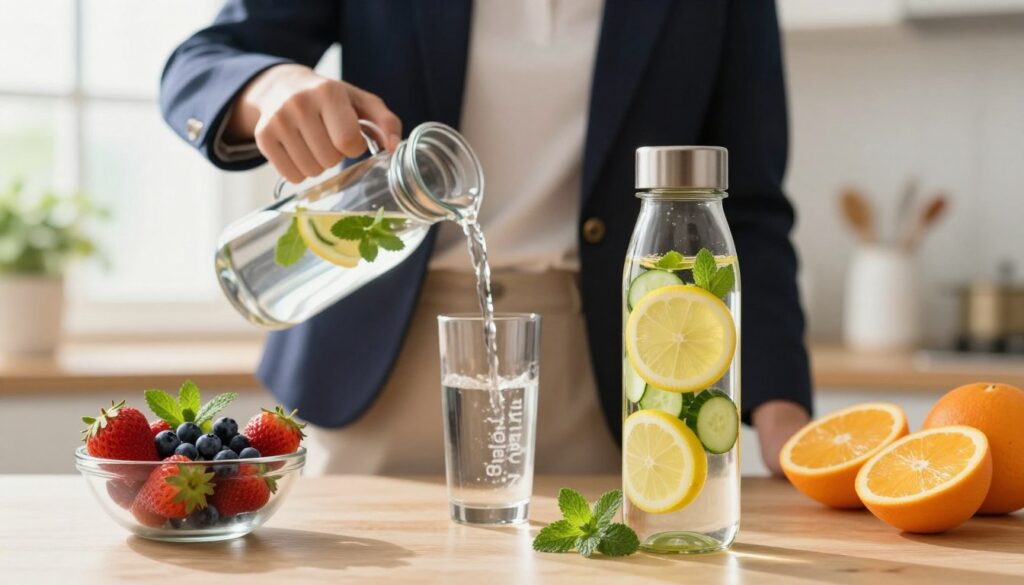
Starting your day with a hydration routine can significantly impact your skin’s health. Begin by drinking a full glass of water upon waking to rehydrate after a night of sleep. Use a gentle cleanser that maintains the skin’s natural moisture barrier, followed by a hydrating toner to prepare your skin for subsequent products. Apply a lightweight moisturizer or serum containing hyaluronic acid or glycerin to lock in moisture. This morning routine helps to replenish and protect your skin throughout the day.
Evening Replenishment Strategies
In the evening, focus on replenishing and repairing your skin. After cleansing, apply a nourishing moisturizer or night cream that contains ingredients like ceramides or peptides to support the skin’s natural repair processes. Consider using a hydrating mask once or twice a week to provide an intense dose of moisture. Before bed, drink a glass of water to help maintain your body’s hydration levels throughout the night. This evening routine aids in restoring your skin’s hydration and elasticity.
By incorporating these morning and evening hydration practices into your daily routine, you can maintain moisturized skin and support overall skin health. Consistency is key to achieving and maintaining hydrated, healthy-looking skin.
Powerful Hydrating Ingredients to Look For
When it comes to maintaining healthy, hydrated skin, the key lies in understanding the powerful hydrating ingredients that can make a significant difference. The right ingredients can help lock in moisture, support the skin’s natural barrier, and enhance its overall appearance.
Hyaluronic Acid: The Moisture Magnet
Hyaluronic acid is renowned for its ability to retain moisture, making it a crucial ingredient in many hydrating skincare products. It can hold up to 1000 times its weight in water, providing intense hydration and plumping the skin to reduce the appearance of fine lines and wrinkles.
Ceramides: Rebuilding the Moisture Barrier
Ceramides are essential lipids that help restore the skin’s barrier function, preventing moisture loss and protecting against environmental stressors. By incorporating ceramides into your skincare routine, you can help rebuild and maintain a healthy moisture barrier.
Glycerin and Other Humectants
Glycerin is another potent humectant that attracts and retains moisture in the skin. Other humectants like sorbitol and honey also play a significant role in maintaining skin hydration. These ingredients work synergistically to keep the skin hydrated and supple.
The effectiveness of these hydrating ingredients can be seen in their ability to improve skin elasticity, reduce the appearance of fine lines, and enhance skin radiance. Here’s a comparison of these ingredients:
| Ingredient | Primary Function | Benefits |
|---|---|---|
| Hyaluronic Acid | Moisture Retention | Intensely hydrates, reduces fine lines and wrinkles |
| Ceramides | Moisture Barrier Repair | Restores skin barrier, prevents moisture loss |
| Glycerin | Humectant | Attracts and retains moisture, keeps skin supple |
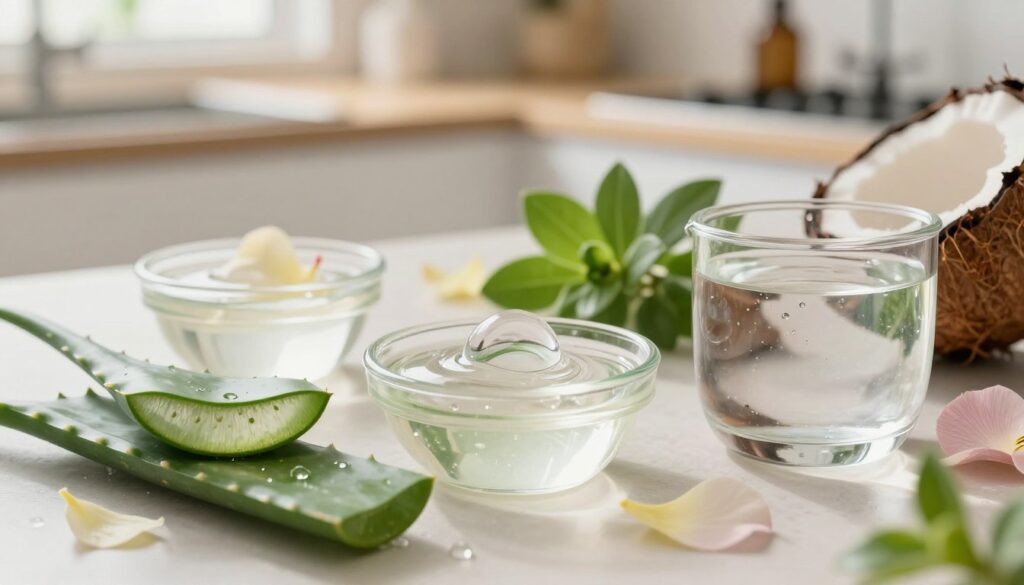
By understanding and incorporating these powerful hydrating ingredients into your skincare routine, you can achieve healthier, more radiant skin. Always look for products that highlight these ingredients to maximize their hydrating benefits.
Common Myths About Skin Hydration Debunked
Separating fact from fiction in skin hydration is crucial for achieving healthy, radiant skin. Many of us unknowingly follow skincare routines based on misconceptions that can hinder our progress. Let’s explore some common myths and the truths behind them.
Oily Skin Doesn’t Need Moisturizer
One of the most prevalent myths is that oily skin doesn’t require moisturizing. However, oily skin still needs hydration to maintain its natural balance. Using the right moisturizer can actually help control oil production and reduce the appearance of pores.
The key is to choose a lightweight, oil-free moisturizer that won’t clog pores. Ingredients like hyaluronic acid and glycerin are excellent for hydrating oily skin without leaving a greasy residue.
| Myth | Reality |
|---|---|
| Oily skin doesn’t need moisturizer | Oily skin benefits from lightweight, oil-free moisturizers |
| Drinking water alone is enough for hydrated skin | Both internal hydration and topical skincare are necessary |
Drinking Water Alone Is Enough
Another common myth is that drinking water alone is sufficient for achieving hydrated skin. While drinking water is essential for overall health and does contribute to skin hydration, it’s not enough on its own.
Topical hydration through moisturizers and serums plays a crucial role in maintaining the skin’s moisture barrier. A comprehensive skincare routine that includes hydrating products is necessary for optimal skin health.
By understanding and debunking these myths, we can refine our skincare routines to better achieve hydrated, healthy skin.
Seasonal Adjustments for Year-Round Hydrated Skin
Seasonal changes significantly impact our skin’s moisture levels, necessitating tailored hydration strategies. As the environment around us changes with the seasons, so too must our approach to keeping our skin hydrated and healthy.
Winter Hydration Challenges and Solutions
During the winter months, the cold, dry air strips the skin of its natural moisture, leading to dryness and irritation. To combat this, it’s essential to intensify your moisturizing routine. Using a humidifier indoors can help maintain a healthy moisture level in the air, while a rich, hydrating moisturizer can lock in moisture. Look for products containing hyaluronic acid and ceramides, which are known for their ability to retain moisture and repair the skin’s barrier.
- Use a gentle, non-stripping cleanser.
- Apply a thick, hydrating moisturizer immediately after bathing.
- Consider using a facial oil for an extra layer of protection.
Summer Hydration Strategies
In the summer, the skin faces different hydration challenges, primarily due to increased temperatures and humidity. While it might seem counterintuitive, the skin still needs hydration, even in humid conditions. Lightweight, oil-free moisturizers are ideal for summer, as they provide hydration without clogging pores. Additionally, drinking plenty of water is crucial to maintain skin hydration from the inside out.
- Stay hydrated by drinking water throughout the day.
- Use a lightweight moisturizer or serum that won’t clog pores.
- Exfoliate regularly to remove dead skin cells and improve skin texture.
Hydration Approaches for Different Skin Types
Effective skin hydration begins with recognizing the distinct needs of your skin type. Different skin types require tailored hydration strategies to achieve optimal skin health.
Dry and Sensitive Skin Hydration
For dry and sensitive skin, hydration is about gentle, nourishing care. Using rich moisturizers that contain ingredients like hyaluronic acid and ceramides can help lock in moisture. Avoid harsh products that can strip the skin of its natural oils.
Ceramide-based moisturizers are particularly beneficial as they help repair the skin’s barrier function, reducing sensitivity and dryness.
Combination Skin Balance
Combination skin requires a balanced approach to hydration. It’s essential to hydrate the dry areas without over-moisturizing the oily zones. Lightweight, non-comedogenic moisturizers can help achieve this balance.
Using a hydrating toner can also help maintain moisture levels across the face without clogging pores.
Acne-Prone Skin Moisture Solutions
For acne-prone skin, hydration might seem counterintuitive, but it’s crucial for maintaining skin health. Oil-free, non-comedogenic products are recommended to provide hydration without clogging pores.
Ingredients like salicylic acid and hyaluronic acid can help control acne while keeping the skin hydrated.
| Skin Type | Hydration Needs | Recommended Products |
|---|---|---|
| Dry/Sensitive | Intensive moisturizing | Rich moisturizers, ceramide-based products |
| Combination | Balanced hydration | Lightweight, non-comedogenic moisturizers |
| Acne-Prone | Oil-free hydration | Oil-free, non-comedogenic products, salicylic acid |
Advanced Hydration Treatments and Technologies
To achieve truly hydrated skin, many are turning to advanced hydration treatments and cutting-edge technologies. These innovations offer more than just superficial benefits, providing deep and lasting hydration.
Professional Hydrating Facials
Professional hydrating facials are a cornerstone of advanced skin hydration. These treatments typically involve a combination of deep cleansing, exfoliation, and the application of potent hydrating serums and masks. Customized to individual skin types, these facials can address specific hydration needs, leaving skin refreshed and rejuvenated.
Hydration Boosting Devices
Hydration boosting devices represent a technological leap forward in skin care. Devices such as facial sprayers and micro-needling machines can enhance the penetration of hydrating products, amplifying their effectiveness. These tools are designed to stimulate the skin’s natural moisture barrier, promoting healthier and more resilient skin.
Overnight Hydration Masks
Overnight hydration masks are another effective solution for intense hydration. These masks work while you sleep, providing an intense dose of moisture. Formulated with ingredients like hyaluronic acid and glycerin, they help to lock in moisture, leaving skin feeling soft and supple by morning.
By incorporating these advanced hydration treatments and technologies into your skin care routine, you can achieve a more hydrated, healthy, and radiant complexion.
Your Path to Consistently Radiant Skin Through Hydration
Achieving radiant, healthy skin is a journey that begins with understanding the importance of hydration. By now, it’s clear that hydration plays a crucial role in maintaining skin elasticity, reducing the appearance of fine lines, and enhancing natural glow.
Consistent hydration is key to unlocking your skin’s full potential. This involves not just drinking enough water, but also using topical products that help retain moisture. By combining internal and external hydration methods, you can achieve a more even-toned and resilient complexion.
To make hydration a part of your skincare routine, start by assessing your skin type and needs. Choose products containing hyaluronic acid, ceramides, and glycerin, which are known for their hydrating properties. By incorporating these practices into your daily regimen, you’ll be on your way to consistently radiant skin.
Maintaining healthy skin is a long-term commitment. Stay hydrated, be patient, and watch your skin transform into a vibrant, healthy canvas that reflects your overall well-being.
FAQ
What are the benefits of hydration for the skin?
Hydration improves skin elasticity and firmness, reduces the appearance of fine lines and wrinkles, and enhances the natural glow and radiance of the skin.
How does drinking water contribute to skin health?
Drinking water helps to maintain the skin’s moisture barrier, keeping it hydrated from the inside out and supporting overall skin health.
What is the role of topical hydration products like moisturizers and serums?
Topical hydration products help to lock in moisture, support the skin’s natural barrier function, and provide additional hydration to dry or dehydrated skin.
How can I identify if my skin is dehydrated?
Dehydrated skin may exhibit visual indicators such as dullness, tightness, or flakiness. You can also perform self-assessments like the pinch test to check for dehydration.
What are some powerful hydrating ingredients I should look for in skincare products?
Hyaluronic acid, ceramides, and glycerin are known for their hydrating properties and can help to maintain or improve skin hydration.
Are there different hydration approaches for different skin types?
Yes, different skin types require tailored hydration approaches. For example, dry and sensitive skin may require more intense moisturizing, while acne-prone skin may benefit from lightweight, oil-free hydration products.
How can I adjust my hydration practices according to the season?
In the winter, use richer moisturizers to combat dry air, while in the summer, opt for lighter, oil-free products to avoid clogging pores.
Can I rely solely on drinking water for hydrated skin?
While drinking water is essential, it is not enough on its own. Topical hydration products are also necessary to maintain hydrated skin, especially in dry environments or during harsh weather conditions.
Are there any advanced hydration treatments or technologies available?
Yes, professional hydrating facials, hydration-boosting devices, and overnight hydration masks are some examples of advanced treatments and technologies that can enhance skin hydration.