
Did you know that regular exercise can boost your mood and energy levels? It also improves overall health. Starting a home workout routine can seem daunting, for those new to fitness. But, with a simple plan, you can start your fitness journey from home.
A beginner-friendly workout is easy to follow, no matter your fitness level. It uses bodyweight exercises and minimal equipment. This makes it easy to start without needing a gym membership.
Key Takeaways
- Regular exercise improves overall health and mood.
- A simple and effective plan is key to starting a home workout routine.
- Bodyweight exercises and minimal equipment are ideal for beginners.
- No gym membership is required to start working out.
- Beginner-friendly workouts are adaptable to different fitness levels.
Understanding the Benefits of Home Workouts
Home workouts are getting more popular. They are flexible, affordable, and fit into your schedule. This trend is because of the many benefits of working out at home.
Convenience of Working Out at Home
Home workouts are super convenient. You don’t have to go to the gym, saving you time. This makes it easier to keep up with your workout plan.
Key benefits of convenience include:
- Time-saving: No need to travel to a gym
- Flexibility: Work out at any time that suits you
- Comfort: Exercise in the comfort of your own home
Cost-Effectiveness of Home Exercise
Home workouts are cheaper than gym memberships. You don’t need much equipment, saving you money. This makes home workouts great for those watching their budget.
The cost-effectiveness can be broken down into:
| Aspect | Gym Membership | Home Workout |
|---|---|---|
| Initial Cost | High enrollment fees | Minimal equipment cost |
| Monthly Cost | Recurring membership fees | No monthly fees |
Tailoring Workouts to Your Schedule
Home workouts let you plan your exercise around your life. Whether you’re busy or have family duties, you can work out when it’s best for you. This is key to keeping up with your fitness goals.
Tips for tailoring your workout schedule:
- Identify your most productive times of the day
- Schedule workouts around other commitments
- Be flexible and adjust as needed
Essential Equipment for Beginners
Starting your home workout journey? Knowing the essential equipment is key for a great experience. Many workouts need little gear, but the right tools can make a big difference.
Must-Have Gear for Home Workouts
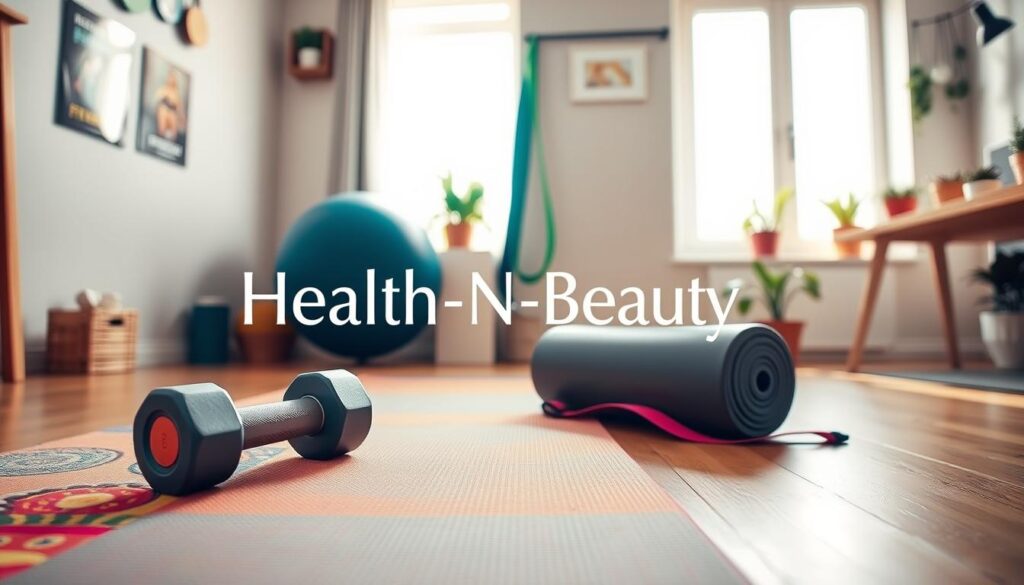
Beginners should start with the basics. A good yoga mat is essential for comfort and grip on the floor. Resistance bands are also great for strength training and are very affordable.
Adding a few simple pieces can really boost your basic workouts for beginners. For example, a yoga mat is perfect for poses like downward-facing dog and warrior poses.
Optional Equipment for Enhanced Workouts
After getting the basics, you can add more gear to make your workouts better. Dumbbells are great for building strength and can be used in many exercises, like bicep curls and squats.
A stability ball is also a good addition. It helps strengthen your core and improve balance. You can use it for crunches, leg raises, and planks.
| Equipment | Use | Benefits |
|---|---|---|
| Yoga Mat | Floor Exercises | Comfort, Grip |
| Resistance Bands | Strength Training | Versatility, Portability |
| Dumbbells | Strength Training | Muscle Building, Variety |
| Stability Ball | Core Strength, Balance | Improved Posture, Core Strength |
How to Make Use of Household Items
Home workouts can get creative by using household items as equipment. For example, water bottles can be used as dumbbells for light weight training. A sturdy chair can help with exercises like chair squats or step-ups.
Using these items can add variety to your beginner fitness routines without spending more money. It’s a smart way to save and get creative with your workouts.
Creating Your Beginner Workout Plan
A good workout plan is key for beginners starting at home. It helps you reach your fitness goals. By setting clear goals and organizing your workouts, you’re off to a great start.
Setting Realistic Fitness Goals
Setting realistic goals is the first step. Decide what you want to achieve, like losing weight, building muscle, or improving health. Fitness experts say setting specific, measurable, achievable, relevant, and time-bound (SMART) goals is important. It helps you track progress and stay motivated.
For example, instead of saying “I want to be healthier,” aim for “I will exercise for 30 minutes, three times a week, for 12 weeks to boost my heart health.” This makes your fitness journey clear.
How to Structure Your Weekly Routine
After setting your goals, plan your weekly workouts. A good routine mixes cardio, strength training, and flexibility exercises. This keeps you fit and reduces injury risk.
Here’s a sample weekly plan:
- Monday: 30 minutes of brisk walking or jogging (Cardio)
- Tuesday: Upper body strength training (e.g., push-ups, dumbbell exercises)
- Wednesday: Rest day or active recovery (e.g., yoga, stretching)
- Thursday: Lower body strength training (e.g., squats, lunges)
- Friday: 30 minutes of cycling or swimming (Cardio)
- Saturday: Core strength training (e.g., planks, Russian twists)
- Sunday: Rest day or active recovery
As you get better, increase the intensity and time of your workouts. Always listen to your body and rest when needed.
Starting a home workout plan needs patience, consistency, and a good plan. By setting realistic goals and organizing your week, you can get a balanced fitness routine that fits your life.
“The only bad workout is the one that didn’t happen.” – Joe Cirulli
Warm-Up Exercises to Start Your Workout
Warming up is key to get your body ready for exercise. It’s a must for easy home workouts. A good warm-up can lower injury risk and boost your workout performance.
Importance of Warming Up
Warming up is vital before starting a workout. It increases blood flow to muscles, raises your heart rate, and gets your joints ready. This makes your muscles less stiff and more flexible, making your workout better.
Key benefits of warming up include:
- Injury prevention
- Improved performance
- Enhanced flexibility
- Better circulation
Effective Warm-Up Techniques
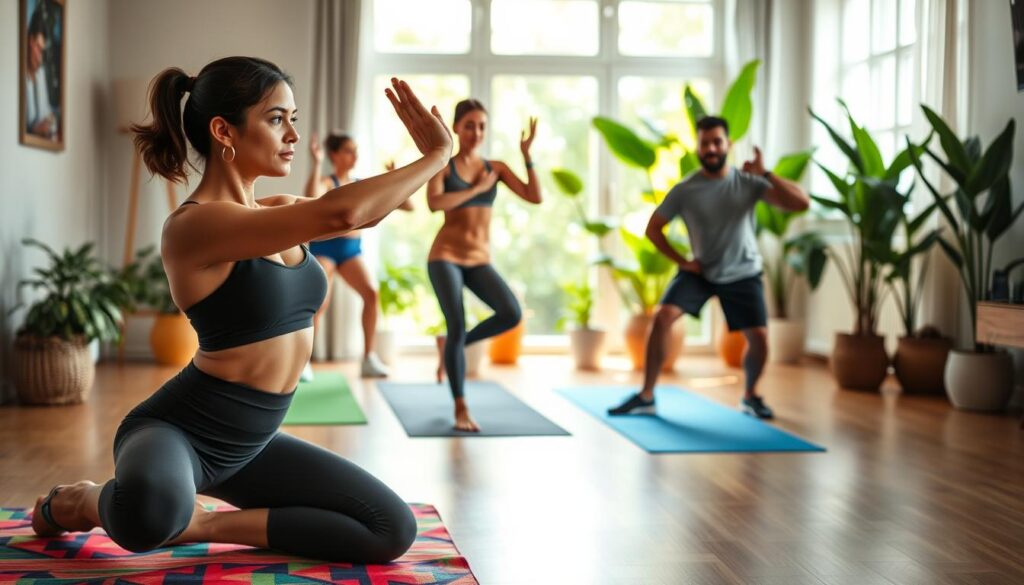
Choosing the right warm-up techniques is important. You can start with light cardio like jogging in place or jumping jacks. Then, do dynamic stretches like leg swings and arm circles. Don’t forget mobility exercises to loosen your joints.
Some examples of warm-up exercises are:
| Exercise | Description | Duration |
|---|---|---|
| Jogging in Place | Running in place without moving forward | 3 minutes |
| Leg Swings | Swinging one leg forward and backward, then switching to the other leg | 2 sets per leg |
| Arm Circles | Holding your arms straight out to the sides and making small circles | 3 sets |
Duration of Warm-Up Sessions
The length of your warm-up depends on your fitness level and workout intensity. Aim for 5 to 10 minutes, gradually getting more intense to prepare your body.
A well-structured warm-up routine might look like this:
- 5 minutes of light cardio
- 3-5 minutes of dynamic stretching
- 2-3 minutes of mobility exercises
Full-Body Workout Routine for Beginners
Beginners can see big fitness gains with a simple full-body workout plan. This routine targets major muscle groups in one session. It’s a great way to boost your overall fitness.
Bodyweight Exercises to Include
Bodyweight exercises are perfect for beginners. They need little equipment and can be adjusted for different fitness levels. Some top bodyweight exercises include:
- Squats: Works the legs and glutes.
- Push-ups: Targets the chest, shoulders, and triceps.
- Lunges: Effective for the legs and glutes.
- Planks: Strengthens the core.
Sample 20-Minute Full-Body Routine
A full-body workout can be done in just 20 minutes. Here’s a sample routine:
- Warm-up: 2 minutes of light cardio (jumping jacks, jogging in place).
- Squats: 3 sets of 10 reps.
- Push-ups: 3 sets of 8 reps.
- Lunges: 3 sets of 10 reps (5 per leg).
- Plank: Hold for 30 seconds, rest for 30 seconds, repeat for 3 sets.
- Cool-down: 2 minutes of stretching.
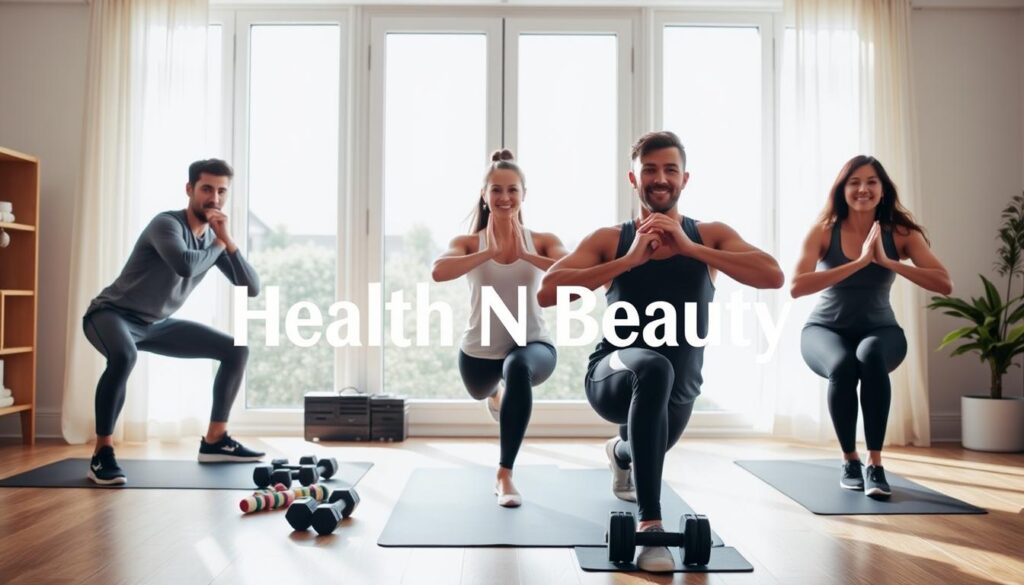
This routine is both effective and quick, perfect for those with tight schedules. By adding these beginner-friendly workouts to your daily routine, you can follow a simple workout plan at home that shows great results.
Focusing on Cardiovascular Fitness
Cardiovascular fitness is key to doing daily tasks with more energy. Regular cardio exercises boost heart health and endurance. They also improve overall well-being.
Benefits of Cardio Workouts
Cardio workouts have many benefits. They improve heart health, increase stamina, and boost metabolism. These exercises burn calories, reduce fat, and enhance physical fitness.
Some key benefits include:
- Enhanced cardiovascular health
- Increased lung capacity
- Better weight management
- Improved mental health and reduced stress
Basic Cardio Exercises for Beginners
Beginners should start with simple cardio routines. Exercises like jogging in place, jumping jacks, cycling, and brisk walking are great. They can be done at home with little to no equipment.
Sample Cardio Exercises:
| Exercise | Description | Duration |
|---|---|---|
| Jumping Jacks | A full-body exercise that involves jumping and spreading your legs apart | 3 sets of 30 seconds |
| Jogging in Place | A simple exercise that involves running in place | 3 sets of 1 minute |
| Cycling | Can be done using a stationary bike or cycling outdoors | 20-30 minutes |
Suggested Duration for Cardio Sessions
The American Heart Association suggests 150 minutes of moderate-intensity cardio weekly. This can be split into shorter sessions, like 30 minutes daily, five days a week.
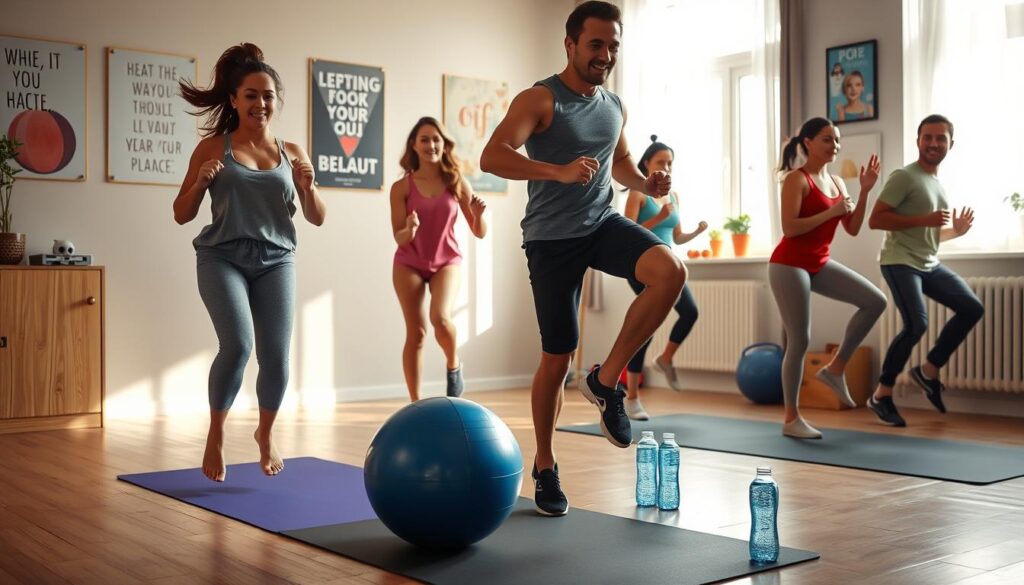
For example: Begin with 15-20 minutes per session, three times a week. Then, increase the duration and frequency as you get fitter.
Incorporating Strength Training at Home
You can do strength training at home without a gym. It’s a key part of staying fit. It helps build muscle, strengthen bones, and boost your metabolism. You can get stronger and healthier without expensive gym gear.
Understanding Strength Training Basics
First, learn the basics of strength training. It’s important to know how to do exercises right to avoid injuries. Proper form is key to get the most out of your workout and stay safe. You can find tutorials online or use fitness apps to help.
Start with weights or resistance you can handle. Then, slowly add more as you get stronger. This way, you keep getting better at strength training.
Beginner-Friendly Resistance Exercises
There are easy exercises for beginners to do at home. Try squats, push-ups, and lunges. They work many muscles at once. Resistance bands are also great for home workouts because they’re easy to use and carry.
- Bodyweight squats: Works the legs and glutes.
- Push-ups: Targets the chest, shoulders, and triceps.
- Lunges: Effective for the legs and glutes.
- Resistance band exercises: Can be used for a variety of muscle groups.
If you have light dumbbells, you can use them too. They offer many exercises to work different muscles.
Adding these exercises to your routine is a great way to start strength training at home. Remember, keep at it and be patient. As you get better, you can make your workouts harder to keep reaching your fitness goals.
Stretching and Cool Down Practices
Stretching and cooling down are key parts of a good home workout. They help reduce muscle soreness and boost performance. Adding these to your easy home exercises improves flexibility and aids in recovery.
Cooling Down After Workouts
Cooling down after exercise is vital. It helps your heart rate return to normal, avoiding dizziness and other issues. It also helps remove waste from your muscles, making recovery smoother.
Good cool down methods include gentle cardio like walking or jogging in place. Then, do static stretches for major muscles. Hold these stretches for 15-30 seconds for a deep stretch.
Effective Stretching Techniques
Good stretching is essential for any simple workout plan at home. Static stretches, where you hold a stretch, are great for flexibility. Dynamic stretches, which involve movement, are also effective when done right.
Here are some key stretches to add to your routine:
- Hamstring Stretch: Stand with feet shoulder-width apart, then bend forward to touch your toes.
- Quad Stretch: Stand with one hand on a wall for balance, lift one leg behind you, and grab your ankle.
- Chest Stretch: Stand in a doorway with hands on the doorframe at shoulder height, then lean forward for a chest stretch.
| Stretching Technique | Muscle Group | Duration |
|---|---|---|
| Hamstring Stretch | Hamstrings | 15-30 seconds |
| Quad Stretch | Quadriceps | 15-30 seconds |
| Chest Stretch | Pectoralis Major | 15-30 seconds |
Adding stretching and cool down to your routine boosts flexibility and reduces soreness. They are vital for any easy home exercises or simple workout plan at home.
Staying Motivated with Home Workouts
Keeping motivated with home workouts is key. Without a gym’s structure, it’s easy to lose focus. Setting clear, achievable goals is essential for your home workout routine.
Effective Strategies for Motivation
Tracking your progress is a great way to stay motivated. Use a fitness journal or app to log your workouts. This helps you see how far you’ve come.
Varying your routine is also important. It keeps things interesting and prevents boredom. Adding beginner-friendly workouts keeps your routine fresh and fun.
Monitoring Progress
Seeing your progress step by step is vital. It keeps you motivated to keep going. Whether you’re starting or keeping up a routine, seeing your progress is a big motivator.
FAQ
What is a good beginner home workout routine?
A good beginner home workout routine includes squats, push-ups, and lunges. It can be done in 20-30 minutes, three to four times a week.
Do I need any equipment for a home workout?
Many home workouts need little equipment. But, a good yoga mat and resistance bands can make your routine more effective.
How do I create a workout plan at home?
To create a workout plan at home, start by setting realistic fitness goals. Then, structure a weekly routine. Include cardiovascular exercise, strength training, and flexibility exercises.
What are some effective warm-up exercises?
Effective warm-up techniques include light cardio and dynamic stretching. Mobility exercises are also good. They should last around 5-10 minutes.
How often should I do cardio workouts at home?
The American Heart Association suggests at least 150 minutes of moderate-intensity cardio weekly. This can be broken into shorter sessions.
Can I do strength training at home without equipment?
Yes, you can do strength training at home without equipment. Use bodyweight exercises like squats, push-ups, and lunges.
Why is stretching and cooling down important after a workout?
Stretching and cooling down after a workout are key. They reduce muscle soreness, improve flexibility, and help with recovery.
How can I stay motivated with home workouts?
To stay motivated with home workouts, set clear goals and track your progress. Vary your routine to avoid boredom. Consider using fitness apps or joining online fitness communities.
What are some beginner-friendly resistance exercises?
Beginner-friendly resistance exercises include bodyweight squats, push-ups, and lunges. You can also use resistance bands or light dumbbells.
How long should a beginner home workout last?
A beginner home workout can last 20-45 minutes. This depends on the intensity and type of exercises.