
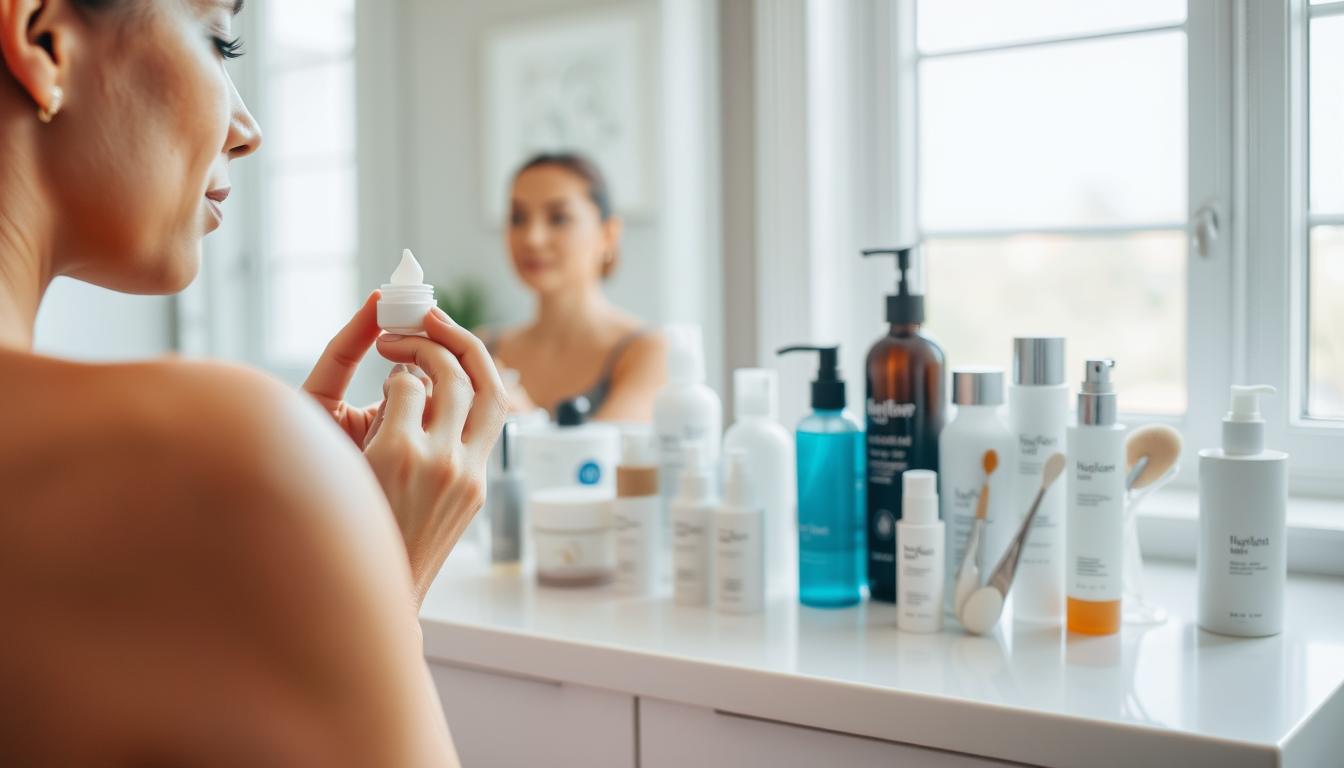
Did you know that a consistent daily skincare routine can improve skin health by up to 50%? With so many products and advice available, creating a skincare regimen can be overwhelming. However, starting with the basics is essential.
Building a skincare routine tailored to your skin type is crucial for achieving healthy, glowing skin. This guide will walk you through the essential steps to establish an effective daily routine, helping you understand your skin type and the products that suit it best.
Key Takeaways
- Understand the importance of a consistent skincare routine.
- Learn how to identify your skin type.
- Discover the essential steps for a daily skincare routine.
- Find out how to choose products suitable for your skin type.
- Understand the benefits of a tailored skincare regimen.
Understanding Your Skin Type
Understanding your skin type is the foundation of creating an effective skincare routine. Knowing whether you have normal, dry, oily, combination, or sensitive skin helps you choose the right products and steps for your skincare routine steps.
How to Determine Your Skin Type
To determine your skin type, start by washing your face with a gentle cleanser and pat it dry. Wait for about an hour without applying any products. Observe how your skin feels and looks. If it feels tight, you likely have dry skin. If it’s shiny, especially on the T-zone (forehead, nose, and chin), you might have oily skin. If it’s comfortable and not too oily or dry, you could have normal skin.
The Five Main Skin Types
The five main skin types are:
- Normal: Balanced skin that’s not too oily or dry.
- Dry: Skin that feels tight and may appear flaky.
- Oily: Shiny skin, especially on the T-zone.
- Combination: Skin that’s oily in some areas (like the T-zone) and dry or normal in others.
- Sensitive: Skin that’s easily irritated by products or environmental factors.
Understanding these categories can help you identify your skin type and guide your product choices.
Factors That Influence Skin Type
Several factors can influence your skin type, including genetics, diet, climate, and lifestyle choices. For instance, hormonal changes can cause your skin to become oilier or drier. Similarly, living in a humid or dry climate can affect your skin’s condition. Recognizing these factors can help you adjust your best skincare routine accordingly.
The Fundamentals of a Skincare Routine
Understanding the fundamentals of a skincare routine is essential for achieving optimal skin health. A well-structured skincare regimen can make a significant difference in the appearance and health of your skin.
Benefits of Regular Skin Care
Regular skin care offers numerous benefits, including improved skin texture, reduced appearance of fine lines, and enhanced skin hydration. By incorporating a consistent skincare routine into your daily life, you can achieve healthier, more resilient skin.
As noted by skincare expert, Dr. Joshua Zeichner, “A consistent skincare routine helps to maintain the health and integrity of the skin, reducing the visible signs of aging and improving overall skin appearance.”
“The key to great skin is consistency. Stick to your routine, and you’ll see results over time.” – Dr. Joshua Zeichner
How Skin Health Impacts Overall Wellbeing
Skin health is closely linked to overall wellbeing. Healthy skin not only boosts confidence but also acts as a barrier against external factors like pollution and pathogens.
| Skin Health Aspect | Impact on Overall Wellbeing |
|---|---|
| Hydration | Improves skin elasticity and overall bodily functions |
| Protection | Acts as a barrier against environmental stressors |
| Confidence | Enhances self-esteem and mental wellbeing |
Setting Realistic Expectations
It’s crucial to set realistic expectations when starting a new skincare regimen. Skincare routine products can take time to show their full benefits, so patience is key.
Tips for Setting Realistic Expectations:
- Understand that skin care is a long-term commitment
- Be patient and give products time to work
- Monitor your skin’s response and adjust your routine as needed
Essential Steps in Any Skincare Routine
The key to a successful skincare routine lies in its consistency and the right sequence of steps. A well-structured routine helps in maintaining the health and integrity of the skin, addressing various skin concerns, and enhancing overall appearance.
Cleansing: The Foundation
Cleansing is the first and most crucial step in any skincare routine. It involves removing dirt, oil, and makeup that can clog pores and cause skin issues. Choosing a cleanser that suits your skin type is vital for effective cleansing without stripping the skin of its natural oils.
Toning: Balancing the Skin
Toning helps in balancing the skin’s pH and removing any residual dirt or cleanser. It prepares the skin for subsequent products, enhancing their absorption. Toners can also deliver active ingredients that address specific skin concerns such as acne or hyperpigmentation.
Moisturizing: Hydration and Protection
Moisturizing is essential for hydrating the skin and protecting it from environmental stressors. It helps in maintaining the skin’s barrier function, reducing the appearance of fine lines and wrinkles. Selecting a moisturizer appropriate for your skin type ensures optimal hydration and protection.
Sun Protection: The Non-Negotiable Step
Sun protection is a critical component of any skincare routine, preventing premature aging and reducing the risk of skin cancer. Using a broad-spectrum sunscreen with an SPF of at least 30 daily, even on cloudy days, is recommended. Reapplication every two hours or immediately after swimming or sweating is crucial for sustained protection.
| Skincare Step | Purpose | Product Recommendation |
|---|---|---|
| Cleansing | Remove dirt, oil, and makeup | Gentle cleanser suitable for your skin type |
| Toning | Balance skin pH, enhance product absorption | Toner with active ingredients for your skin concern |
| Moisturizing | Hydrate and protect the skin | Moisturizer appropriate for your skin type |
| Sun Protection | Prevent premature aging and skin cancer | Broad-spectrum sunscreen, SPF 30 or higher |
Morning vs. Evening Skincare Routine
The key to an effective skincare routine lies in understanding the distinct requirements of your skin during the morning and evening.
AM Routine Essentials
In the morning, your skincare routine should focus on protection and preparation for the day ahead. Start with a gentle cleanser, followed by a toner to balance your skin’s pH. Apply a lightweight moisturizer to hydrate your skin without feeling greasy. Don’t forget sunscreen, as it’s crucial for protecting your skin from UV damage.
PM Routine Must-Haves
In the evening, your routine should shift towards repair and rejuvenation. Begin with a double cleanse to remove dirt, makeup, and impurities. Apply a toner, followed by a treatment product containing active ingredients like retinol or vitamin C. Finish with a nourishing moisturizer to lock in the previous steps’ benefits.

Adjusting Routines for Seasons
As the seasons change, so do your skin’s needs. In the winter, focus on intensive hydration with richer moisturizers. In the summer, switch to lighter formulations and emphasize sun protection.
| Routine | Morning | Evening |
|---|---|---|
| Cleanser | Gentle cleanser | Double cleanse |
| Toner | Balancing toner | Exfoliating toner |
| Moisturizer | Lightweight moisturizer | Nourishing moisturizer |
Building a Skincare Routine for Dry Skin
Understanding the specific needs of dry skin is crucial for developing an effective skincare routine. Dry skin, characterized by its lack of moisture, requires a gentle, nourishing approach to restore its natural barrier.
Identifying Dry Skin Characteristics
Dry skin often feels tight, rough, and may appear flaky or dull. It’s essential to recognize these characteristics to tailor your skincare routine accordingly. Key characteristics include:
- Tightness, especially after cleansing
- Rough texture
- Flakiness or scaling
- Dull appearance
Best Ingredients for Dry Skin
For dry skin, look for ingredients that provide intense hydration and nourishment. Hyaluronic acid, ceramides, and glycerin are excellent for retaining moisture. As dermatologist Dr. Joshua Zeichner notes, “Hyaluronic acid can hold up to 1000 times its weight in water, making it an excellent humectant for dry skin.”
Sample Routine for Dry Skin
Morning Steps
Begin with a gentle cleanser, followed by a hydrating toner, and finish with a moisturizer containing hyaluronic acid or ceramides. Apply a broad-spectrum sunscreen with at least SPF 30.
Evening Steps
Cleanse your skin gently, then apply a nourishing serum or oil. Follow with a rich moisturizer to lock in hydration overnight. Consider using a hydrating mask 1-2 times a week for extra nourishment.
Creating a Skincare Routine for Oily Skin
Developing a skincare routine for oily skin can be challenging, but with the right steps, you can achieve a balanced complexion. Oily skin is characterized by an overproduction of sebum, which can lead to clogged pores and acne.
Identifying Oily Skin Characteristics
Oily skin often appears shiny, particularly on the T-zone (forehead, nose, and chin). It can also be prone to blackheads and whiteheads. If you notice that your skin feels greasy throughout the day, you likely have oily skin.
Best Ingredients for Oily Skin
When choosing products for oily skin, look for ingredients that help control oil production and reduce acne. Salicylic acid and benzoyl peroxide are effective in unclogging pores and reducing inflammation. Glycolic acid can also help exfoliate the skin, removing dead skin cells and promoting a brighter complexion.
Sample Routine for Oily Skin
A consistent skincare routine is key to managing oily skin. Here’s a simple, effective routine:
Morning Steps
- Cleanse with a gentle, oil-free cleanser.
- Tone with a product containing witch hazel to help balance the skin’s pH.
- Moisturize with a lightweight, oil-free moisturizer.
- Apply a broad-spectrum sunscreen with at least SPF 30.
Evening Steps
- Double-cleanse with an oil-based cleanser followed by a foaming cleanser.
- Exfoliate with a product containing salicylic acid or glycolic acid 2-3 times a week.
- Tone as in the morning.
- Apply a treatment product containing benzoyl peroxide or retinoids.
- Moisturize with a lightweight moisturizer.
By following this routine, you can help control oil production, reduce acne, and achieve a healthier, more balanced complexion.
Developing a Skincare Routine for Combination Skin
Combination skin demands a nuanced skincare strategy to address its unique needs. This skin type is characterized by a mix of oily and dry skin, typically with an oily T-zone (forehead, nose, and chin) and dry cheeks.
Identifying Combination Skin Characteristics
To develop an effective skincare routine, it’s crucial to understand the characteristics of combination skin. Common traits include enlarged pores in the T-zone, occasional breakouts, and dryness on the cheeks.
Best Ingredients for Combination Skin
For combination skin, it’s essential to balance oil control with hydration. Look for products containing salicylic acid or glycolic acid to exfoliate and unclog pores, while using hyaluronic acid for hydration.
Sample Routine for Combination Skin
A well-balanced routine for combination skin involves a combination of products that address both oily and dry areas.
Morning Steps
- Cleanse with a gentle, non-comedogenic cleanser.
- Tone with a witch hazel or tea tree water to balance the skin.
- Moisturize with a lightweight, oil-free moisturizer.
- Apply a broad-spectrum sunscreen with at least SPF 30.
Evening Steps
- Double-cleanse with an oil-based cleanser followed by a gentle foaming cleanser.
- Exfoliate 1-2 times a week with a product containing salicylic acid or glycolic acid.
- Tone and moisturize as in the morning routine.
| Product | Morning | Evening |
|---|---|---|
| Cleanser | Gentle, non-comedogenic | Double-cleanse (oil-based + foaming) |
| Toner | Witch hazel or tea tree water | Same as morning |
| Moisturizer | Lightweight, oil-free | Same as morning |
| Exfoliant | No | 1-2 times a week (salicylic or glycolic acid) |
| Sunscreen | SPF 30 or higher | No |
Crafting a Skincare Routine for Sensitive Skin
Creating a skincare routine for sensitive skin requires a gentle and informed approach. Sensitive skin can be easily irritated by harsh products or extreme temperatures, making it crucial to select products carefully.
Identifying Sensitive Skin Characteristics
Sensitive skin often reacts with redness, itching, or stinging sensations when exposed to certain products or environmental factors. Recognizing these signs is the first step in developing a suitable skincare routine.
Best Ingredients for Sensitive Skin
Gentle, fragrance-free products are typically recommended for sensitive skin. Ingredients like aloe vera and green tea are known for their soothing properties.
Ingredients to Avoid
Products containing alcohol, artificial fragrances, or harsh exfoliants can exacerbate sensitivity and should be avoided.
Sample Routine for Sensitive Skin
A simple, consistent routine is key. Here’s a basic outline:
Morning Steps
- Cleanse with a gentle, fragrance-free cleanser.
- Apply a soothing toner.
- Moisturize with a gentle, non-comedogenic moisturizer.
- Apply a broad-spectrum sunscreen.
Evening Steps
- Cleanse with a gentle cleanser.
- Apply a calming serum or treatment product.
- Moisturize to lock in previous steps.

Addressing Specific Skin Concerns
Skin concerns such as hyperpigmentation, rosacea, and acne can be challenging, but with the right approach, they can be effectively managed. Understanding the causes and identifying the appropriate treatments are crucial steps in achieving healthier, more radiant skin.
Acne and Breakouts
Acne is a common skin concern that can be caused by a combination of factors including genetics, hormonal changes, and environmental influences. To address acne, it’s essential to use products containing salicylic acid or benzoyl peroxide, which help to unclog pores and reduce inflammation.
Aging and Fine Lines
Aging skin is another prevalent concern, characterized by fine lines, wrinkles, and loss of skin elasticity. Using products rich in retinol, peptides, and hyaluronic acid can help to stimulate collagen production, improve skin texture, and reduce the appearance of fine lines.
Hyperpigmentation
Hyperpigmentation refers to areas of skin darkening caused by excess melanin production. To address hyperpigmentation, look for products containing vitamin C, niacinamide, or licorice extract, which can help to brighten and even out skin tone.
Rosacea and Redness
Rosacea is a condition characterized by redness, flushing, and visible blood vessels. Managing rosacea involves using gentle, soothing products that contain ingredients like green tea, chamomile, or sulfur, which can help to calm and reduce redness.
Incorporating Treatment Products
When incorporating treatment products into your skincare routine, it’s essential to start with a small concentration and gradually increase as your skin becomes more tolerant. Always patch test new products to avoid adverse reactions.
| Skin Concern | Key Ingredients | Product Type |
|---|---|---|
| Acne | Salicylic acid, Benzoyl peroxide | Cleanser, Spot treatment |
| Aging | Retinol, Peptides, Hyaluronic acid | Serum, Moisturizer |
| Hyperpigmentation | Vitamin C, Niacinamide, Licorice extract | Serum, Toner |
| Rosacea | Green tea, Chamomile, Sulfur | Moisturizer, Cream |
By understanding your specific skin concerns and using the right treatment products, you can achieve significant improvements in your skin’s health and appearance.
Common Mistakes to Avoid in Your Skincare Routine
A well-crafted skincare routine is crucial, but it’s equally important to avoid certain mistakes that can undermine your efforts. By understanding what not to do, you can enhance the effectiveness of your routine and achieve healthier, more radiant skin.
Over-Exfoliating
Exfoliating is a vital step in removing dead skin cells and unclogging pores. However, over-exfoliating can lead to irritation, dryness, and even infection. Limit exfoliation to 1-3 times a week, depending on your skin type and the product used.
Using Too Many Active Ingredients
While active ingredients can be beneficial, using too many at once can cause irritation and reduce their effectiveness. Start with a single product and gradually introduce others to avoid overwhelming your skin.

Skipping Sunscreen
Sunscreen is a non-negotiable step in any skincare routine. It protects against UV damage, prevents premature aging, and reduces the risk of skin cancer. Apply a broad-spectrum sunscreen daily, even on cloudy days.
Not Giving Products Enough Time
Patience is key when introducing new skincare products. Give each product at least a few weeks to show its effects before deciding it’s not working for you.
Ignoring the Neck and Décolletage
The neck and décolletage area is often neglected but is just as susceptible to signs of aging as the face. Extend your skincare routine to include these areas to maintain a cohesive, youthful appearance.
Conclusion
Developing a simple skincare routine tailored to your skin type is crucial for achieving healthy, glowing skin. By understanding your skin’s needs and incorporating the right skincare routine products, you can create a best skincare routine that works for you.
Consistency is key when it comes to skincare. Sticking to your routine and giving your skin time to adjust and respond is essential. Be patient and don’t be discouraged by initial results – it may take some time to see improvements.
By following the guidelines outlined in this article, you can create a personalized skincare routine that addresses your specific skin concerns and needs. Remember to choose products that are suitable for your skin type and concerns, and don’t hesitate to seek professional advice if needed.
FAQ
What is the best skincare routine for my skin type?
The best skincare routine for your skin type depends on your individual skin concerns and needs. Understanding your skin type, whether it’s dry, oily, combination, or sensitive, is crucial in determining the right products and steps to include in your routine.
How often should I exfoliate my skin?
Exfoliating frequency depends on your skin type and concerns. For most skin types, exfoliating one to three times a week is sufficient. However, if you have sensitive skin, it’s best to start with once a week and adjust as needed.
What are the essential steps in a daily skincare routine?
A basic skincare routine should include cleansing, toning, moisturizing, and sun protection. These steps help maintain clean, balanced, and hydrated skin, while also protecting it from environmental stressors.
Can I use the same skincare products in the morning and evening?
While some products can be used both in the morning and evening, others are more suited to specific times of day. For example, a lightweight moisturizer with SPF is perfect for morning use, while a richer moisturizer or treatment product may be more suitable for evening use.
How do I know if I’m using too many active ingredients in my skincare routine?
If you’re experiencing irritation, redness, or dryness, it may be a sign that you’re using too many active ingredients. Start by simplifying your routine and gradually introducing new products to avoid overwhelming your skin.
What’s the importance of sunscreen in a skincare routine?
Sunscreen is a crucial step in any skincare routine, as it protects the skin from UV damage, prevents premature aging, and reduces the risk of skin cancer. Look for a broad-spectrum sunscreen with at least SPF 30 and apply it daily, even on cloudy days.
How long does it take to see results from a new skincare routine?
It can take anywhere from a few weeks to a few months to see noticeable results from a new skincare routine. Be patient, and give your skin time to adjust and respond to the new products and steps.
Can I use skincare products if I have sensitive skin?
Yes, but it’s essential to choose products that are labeled as “sensitive skin friendly” or “hypoallergenic.” Look for products with soothing ingredients like aloe vera or chamomile, and avoid harsh exfoliants or fragrances.
What’s the difference between a morning and evening skincare routine?
A morning skincare routine focuses on preparing the skin for the day ahead, with products that provide protection and hydration. An evening skincare routine, on the other hand, focuses on repairing and rejuvenating the skin, with products that help to remove dirt and impurities and promote overnight skin renewal.