
Did you know that nearly 75% of adults in the United States deal with chronic stress? This can lead to serious health problems like anxiety, depression, and heart disease. In our fast-paced world, it’s key to find good ways to reduce stress for our well-being.
Stress management is vital for a balanced life. Mindfulness helps by making us relax and build emotional strength. Adding simple yet effective mindfulness practices to our daily lives can help us handle stress better and boost our mental health.
Key Takeaways
- Understanding the impact of chronic stress on health.
- Exploring the role of mindfulness in stress reduction.
- Simple techniques for incorporating mindfulness into daily life.
- Benefits of mindfulness for emotional resilience.
- Practical tips for managing stress effectively.
Understanding Mindfulness and Its Benefits
In today’s fast world, knowing about mindfulness is key for stress management and better well-being. Mindfulness is more than a trend; it’s a lifestyle that lowers stress and boosts mental clarity.
Definition of Mindfulness
Mindfulness means being fully present and aware of the moment. It involves noticing thoughts, feelings, and body sensations without judgment. Jon Kabat-Zinn, a mindfulness leader, said,
“Mindfulness is the awareness that arises from paying attention on purpose, in the present moment, and non-judgmentally to the unfolding of experience.”
This quote shows mindfulness’s core: focusing on the now and being aware intentionally.
Importance of Mindfulness for Stress Management
Mindfulness is vital for managing stress. It helps people deal with life’s challenges, reducing stress’s effects on health. Mindfulness techniques, like meditation and deep breathing, lower stress hormones. This leads to a calmer state.
How Mindfulness Affects the Brain
Mindfulness changes the brain, improving attention, emotion control, and memory. Regular practice can alter brain structure and function. This boosts cognitive and emotional strength. Studies show mindfulness increases gray matter in key brain areas, showing its long-term benefits.
The Science Behind Stress
Understanding stress is key to managing it well. Stress isn’t just in our minds; it also affects our bodies. It makes us ready to face threats by changing how we feel and act.
What Happens in the Body During Stress
When we feel stressed, a part of our brain called the hypothalamus kicks in. It sends out stress hormones like cortisol and adrenaline. These hormones make our heart beat faster, our blood pressure go up, and give us more energy.

The Long-Term Effects of Chronic Stress
Stress is meant to be short-term, helping us deal with immediate dangers. But, long-term stress can harm our health. It can mess with our body’s balance, affecting many systems.
| System Affected | Potential Long-Term Effects |
|---|---|
| Nervous System | Anxiety, depression, and mood disorders |
| Cardiovascular System | Hypertension, heart disease, and stroke |
| Immune System | Weakened immunity, frequent infections |
How Mindfulness Can Counteract Stress Responses
Mindfulness meditation and other mindfulness practices can help fight stress. They make us relax and lower stress hormones. This can lessen the harm of long-term stress.
Practicing mindfulness regularly changes our brain. It makes us more resilient to stress. This improves our overall well-being and gives us stress relief tips for everyday life.
Mindfulness Practices to Try
There are many mindfulness techniques to reduce stress and boost well-being. Adding these practices to your daily life can bring calm and strength.
Breathing Exercises for Mindfulness
Breathing exercises are key in mindfulness. They calm the mind and lower stress by focusing on breathing. The 4-7-8 breathing exercise, or “Relaxation Breath,” is a great example.
- Inhale through your nose for a count of 4.
- Hold your breath for a count of 7.
- Exhale through your mouth for a count of 8.
Repeat this cycle several times. Another easy method is diaphragmatic breathing. This involves breathing deeply into your diaphragm, not shallowly into your chest.

Body Scan Meditation
Body scan meditation focuses on different body parts, starting from toes to head. It helps release tension and relaxes you.
- Find a comfy position, lying down or sitting.
- Close your eyes and breathe deeply.
- Focus on your toes, noticing sensations without judgment.
- Slowly move your attention up your body, pausing at each major muscle group.
This meditation is great before sleep. It helps relax and can make your sleep better.
Mindful Walking Techniques
Mindful walking is a powerful mindfulness tool. It involves focusing on your walk, feeling your feet touch the ground, and noticing your body’s movement.
- Choose a quiet, safe place to walk.
- Focus on the sensation of each step.
- Notice your legs’ movement and your breath’s rhythm.
Mindful walking can be done at any pace. It’s a wonderful way to mix physical activity with mindfulness.
Creating a Mindfulness Routine
Creating a consistent mindfulness routine helps you feel calm and clear in your daily life. It lets you manage stress better and improve your well-being.
Setting Aside Time for Mindfulness
To start a mindfulness routine, pick a specific time each day for it. It could be early morning, lunchtime, or before bed. Choose what fits your schedule best.
Tips for Allocating Time:
- Begin with 5-10 minutes a day and increase as you get more comfortable.
- Be consistent; practice at the same time every day to make it a habit.
- If you miss a day, don’t worry. Just move on to the next day’s practice.
Finding the Right Environment
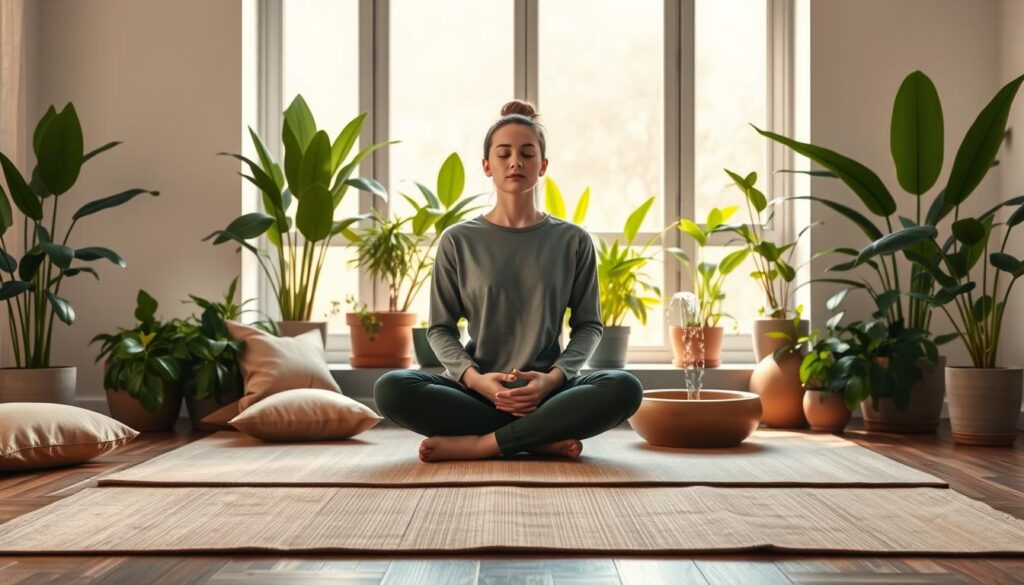
The place where you practice mindfulness is important. It should be quiet, comfy, and free from distractions.
Creating a Conducive Environment:
- Find a quiet spot in your home or office where you can sit comfortably.
- Use candles, plants, or soft music to make the atmosphere calm.
- Keep the space clean and clutter-free to feel more serene.
Incorporating Mindfulness into Daily Activities
Mindfulness isn’t just for set times; you can do it in daily activities too. It helps you stay aware and lowers stress.
| Activity | Mindfulness Technique |
|---|---|
| Eating | Focus on the taste, texture, and smell of your food. Chew slowly and enjoy each bite. |
| Walking | Feel your feet touching the ground, the rhythm of your steps, and the surroundings. |
| Listening | Listen to the speaker’s words, tone, and body language. Don’t plan your response while they speak. |
By adding mindfulness to daily tasks, you can make routine activities into chances for stress relief and growth.
Mindfulness Apps for Stress Relief
Mindfulness apps make it easy to reduce stress every day. With so many options, it’s important to know what makes a good app.
Popular Mindfulness Apps to Explore
Many mindfulness apps are popular for their features and ease of use. Here are some top ones:
- Headspace: Known for its personalized meditation sessions and guided relaxation techniques.
- Calm: Offers a wide range of meditation sessions, sleep stories, and relaxing music.
- Insight Timer: Features a vast library of free guided meditations and a timer for personal practice.
Features to Look for in Mindfulness Apps
When picking a mindfulness app, look for these key features:
| Feature | Description | Importance |
|---|---|---|
| Guided Meditations | Led by experienced instructors, these sessions help users get started with mindfulness practices. | High |
| Personalization | Customizable sessions based on user preferences and goals. | Medium |
| Tracking Progress | Ability to monitor progress and maintain consistency. | High |
Reviews of Top Mindfulness Apps
User reviews offer insights into an app’s effectiveness. Here’s a quick look at the top apps:
- Headspace: 4.8/5 – Praised for its engaging animations and personalized plans.
- Calm: 4.7/5 – Appreciated for its soothing content and sleep-focused features.
- Insight Timer: 4.8/5 – Commended for its vast library and community features.
By looking at these factors and checking out popular apps, you can find the best one for your stress relief needs.
Mindfulness and Self-Compassion
Mindfulness and self-compassion work together to help manage stress. By being mindful, we can treat ourselves with kindness and acceptance. This leads to better emotional strength.
Self-compassion means being kind to ourselves, even when things are tough. It’s about accepting that we’re all imperfect.
Understanding Self-Compassion in Mindfulness
Self-compassion is key in mindfulness. It helps us see our experiences without judgment. It connects us to others, making us understand our shared human experiences.
Self-compassion means being gentle with ourselves. It’s about avoiding self-criticism and accepting our flaws. This builds emotional strength and helps us handle stress.
Techniques for Practicing Self-Compassion
There are ways to practice self-compassion with mindfulness:
- Mindful self-inquiry: Reflecting on our experiences with kindness and curiosity.
- Loving-kindness meditation: Focusing on sending kindness to ourselves and others.
- Body scan: Noticing physical sensations with a compassionate attitude.
These methods help us develop a compassionate relationship with ourselves. They make mindfulness more effective.
The Impact of Self-Compassion on Stress
Adding self-compassion to mindfulness greatly helps with stress. It teaches us to be kind to ourselves, making it easier to deal with stress.
| Benefits of Self-Compassion | Impact on Stress |
|---|---|
| Enhanced emotional resilience | Reduced stress reactivity |
| Increased feelings of safety and comfort | Improved ability to cope with challenges |
| Better emotional regulation | Lessened anxiety and depression |
The practice of self-compassion in mindfulness greatly improves our well-being. It’s a strong way to manage stress and enhance our lives.
Mindfulness in the Workplace
In today’s fast-paced work environment, mindfulness is key for reducing stress and boosting productivity. The modern workplace’s evolution makes maintaining a healthy work-life balance more critical than ever.

Benefits for Professionals
Mindfulness brings many benefits to professionals, like lower stress, better focus, and improved well-being. By adding mindfulness to their daily routines, employees can handle workplace pressures better and work more efficiently.
Key benefits include:
- Enhanced focus and concentration
- Improved emotional regulation
- Better decision-making capabilities
- Reduced absenteeism due to stress-related illnesses
Mindfulness Techniques for Busy Schedules
For those with hectic schedules, finding time for mindfulness can be tough. Yet, even short mindfulness exercises can help. Techniques like deep breathing exercises, short meditation sessions, and mindful walking can fit into a busy day.
| Technique | Duration | Benefits |
|---|---|---|
| Deep Breathing | 5 minutes | Reduces stress, improves focus |
| Short Meditation | 10 minutes | Enhances calmness, improves emotional regulation |
| Mindful Walking | 10-15 minutes | Boosts creativity, reduces stress |
Encouraging a Mindful Culture at Work
Building a mindful culture at work is more than individual practices; it’s a team effort. Companies can support mindfulness by running training programs, setting up quiet spaces for meditation, and encouraging mindful breaks.
By promoting a mindful work environment, companies can see many benefits. These include happier employees, lower turnover rates, and better overall productivity.
Mindfulness for Parents and Caregivers
Mindfulness can be a guiding light for parents, helping you face challenges with ease and compassion. As a parent or caregiver, you shape your children’s lives and manage the stress that comes with it.
Strategies for Practicing Mindfulness with Kids
Practicing mindfulness with your kids can be fun and rewarding. Activities like deep breathing exercises, mindful walking, or eating a meal together in silence can teach mindfulness to children.
One good strategy is to add mindfulness to daily routines. For instance, take a few minutes to breathe deeply before starting the day. Or practice gratitude during dinner to set a positive tone.
Benefits of Mindfulness for Parenting Stress
Mindfulness can reduce parenting stress by promoting relaxation and improving emotional control. It helps parents respond to their children’s needs more thoughtfully, not impulsively.
Children also benefit, learning to manage their emotions and develop better coping skills. This can make for a more harmonious family environment.
Resources for Mindful Parenting
For those interested in mindful parenting, many resources are available. Mindfulness apps for parents and kids offer guided meditations and exercises.
Books and online courses on mindful parenting provide valuable insights and practical tips. Joining a community of like-minded parents is also a great way to share experiences and learn from others.
Overcoming Common Challenges to Mindfulness
Mindfulness practice comes with its own set of challenges. Knowing these challenges is the first step to overcoming them. As people start their mindfulness journey, they may face several common obstacles. These obstacles can make it hard to keep up with a regular practice.
Dealing with Distracting Thoughts
One big challenge is dealing with distracting thoughts. Our minds can be like a “monkey mind,” jumping from one thought to another. This makes it tough to stay focused. Here are some strategies to help:
- Acknowledge the thought and let it go without judgment.
- Focus on the breath or a mantra to anchor the mind.
- Practice mindfulness meditation regularly to improve concentration.
Using these techniques can help manage distracting thoughts. This way, individuals can achieve a more mindful state.
Finding Consistency in Practice
Being consistent is key to enjoying mindfulness benefits. But, it can be hard to keep up. Here are some tips to help:
- Start small: Begin with short mindfulness exercises and gradually increase the duration.
- Schedule it: Treat mindfulness practice as a non-negotiable part of your daily routine.
- Find a mindfulness buddy: Practicing with a friend or family member can provide motivation and accountability.
By following these tips, individuals can make mindfulness a regular part of their lives.
Addressing Skepticism About Mindfulness
Some people might doubt the benefits of mindfulness or have wrong ideas about it. To overcome skepticism, it’s important to:
- Educate yourself: Learn about the science behind mindfulness and its benefits.
- Start with an open mind: Be willing to try mindfulness practices without preconceived notions.
- Share experiences: Discuss your mindfulness journey with others to inspire and encourage them.
By taking these steps, individuals can overcome skepticism. They can gain a deeper understanding of mindfulness’ value in their lives.
Enhancing Mindfulness through Community
Mindfulness grows stronger when we share it with others. It creates a bond and understanding. When we practice with like-minded people, we learn and stay motivated.
Joining a Mindfulness Group
Being part of a mindfulness group changes lives. It’s a place where we can practice together. Here, we feel connected and stay on track with our mindfulness journey.
Benefits of Mindfulness Groups include:
- Shared experiences and understanding
- Motivation and accountability
- Opportunities to learn from others
Participating in Retreats and Workshops
Retreats and workshops are deep dives into mindfulness. They let us break free from daily life. We focus on growing and learning.
Key benefits of these events include:
- Intensive mindfulness practice
- Guidance from experienced instructors
- Opportunities for self-reflection and growth
The Value of Shared Mindfulness Experiences
Sharing mindfulness with others adds richness to our practice. It brings new views and understanding. Through communal activities, we build empathy and connection.
Practicing mindfulness together helps us reduce stress and feel better. We feel supported and understood by our community.
Conclusion: Embracing Mindfulness for Lasting Stress Relief
Mindfulness techniques are a strong way to handle stress and boost well-being. By adding mindfulness to our daily lives, we can become more resilient to stress. This helps improve our mental health.
Key Takeaways
The mindfulness methods talked about, like breathing exercises and meditation, are great for managing stress. Using these techniques regularly can really cut down stress levels.
Starting Your Mindfulness Journey
To start, commit to regular mindfulness practice. Begin with short sessions and grow them as you get more comfortable. Mindfulness apps and groups can also help a lot.
A Path to Lasting Stress Relief
Mindfulness isn’t just a quick fix but a long-term way to manage stress. By making mindfulness a part of our daily lives, we can find lasting relief from stress. These techniques are a great help for anyone wanting to lower stress and feel better.
FAQ
What is mindfulness and how does it help with stress relief?
Mindfulness is about being in the moment. It means paying attention to your thoughts, feelings, and body without judging. It helps reduce stress by making you more aware of your emotions and thoughts. This leads to a more balanced life and better well-being.
How do I start a mindfulness practice for stress management?
Start by setting aside a few minutes each day. Focus on your breath, body, or emotions. Use guided meditations or mindfulness apps to help. Begin small and gradually increase your practice.
Can mindfulness be practiced anywhere, or is a specific environment required?
You can practice mindfulness anywhere, anytime. A quiet space is helpful but not necessary. It’s about being present in the moment, so you can do it during daily activities or while commuting.
How does mindfulness affect the brain and stress response?
Mindfulness changes the brain’s structure and function, affecting stress and emotions. It reduces stress hormones like cortisol. This leads to a lower stress response and better resilience.
Are there any mindfulness techniques that are good for stress relief?
Yes, techniques like deep breathing, body scan meditation, and mindful walking are great for stress relief. They calm the nervous system, reduce tension, and promote relaxation.
Can mindfulness apps really help with stress relief, and which ones are recommended?
Mindfulness apps are a great tool for stress relief. They offer guided meditations, tracking, and personalized content. Headspace, Calm, and Insight Timer are popular apps that support stress management.
How can I incorporate mindfulness into my daily routine?
Find moments in your day to practice mindfulness, like during your commute or while eating. Schedule dedicated mindfulness time, even if it’s just a few minutes.
What are some common challenges to mindfulness practice, and how can I overcome them?
Challenges include distracting thoughts and lack of consistency. Approach mindfulness without judgment and start small. Be patient and seek guidance from teachers, apps, or online resources.
Can mindfulness be beneficial for stress relief in the workplace?
Yes, mindfulness is great for workplace stress relief. Practices like deep breathing and meditation can reduce stress, improve focus, and enhance well-being.
How can I maintain a consistent mindfulness practice?
Establish a routine and set realistic goals. Track your progress and find a mindfulness community or partner for support and motivation.